She Has No Name. But She Has Survived 4,500 Years.
A 4,500-year-old terracotta figurine, acquired by the RYW Club through blockchain memberships, makes historical artifacts accessible to communities while addressing knowledge, and isolation barriers to cultural ownership.
May 21, 2026
She fits in the palm of your hand.
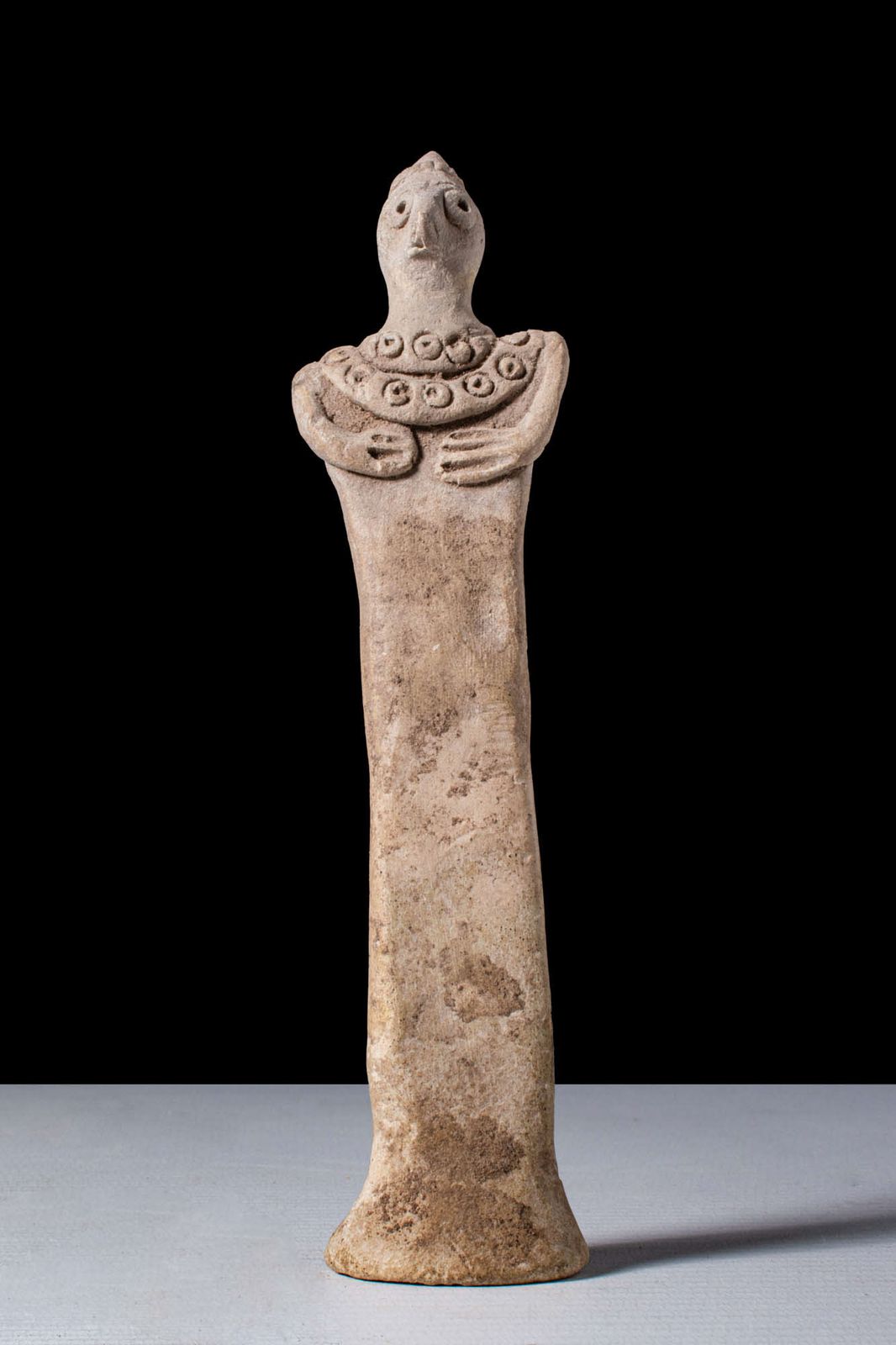
A terracotta figure, 135 millimetres tall, weighing just 40 grams. Her body is elongated, almost pillar-like, flaring gently at the base. Her head is stylised - avian, pointed, with two circular incised eyes that stare upward with an expression impossible to read. Around her neck, two rows of carefully applied circular appliqués form a necklace, each one placed by hand, one by one, by someone who cared about the details.
She was made somewhere in the region we now call Syria or southern Anatolia, sometime between 2500 and 2000 BC. The Early Bronze Age. A time when the pyramids of Giza were being built, when writing was still a new technology, when most of Europe was still living in the Stone Age.
We do not know her name. We do not know who made her, or who owned her, or what prayers were spoken in her presence. We know only that she survived - wars, migrations, the collapse of civilisations, the passage of four and a half millennia - and that she is now part of the RYW Club collection.
What She Is
Scholars classify her as a Syro-Hittite female idol, a type of votive figurine produced across the ancient Near East during the Early Bronze Age. Similar pieces have appeared at Christie's - Live Auction 2490, Antiquities, December 2011 - and in museum collections across Europe and the Middle East.
Her avian head is characteristic of a specific tradition of female deity representation in this region and period. The pointed beak, the round eyes, the way the head tilts slightly upward - these are not accidents of craft, but deliberate choices made by an artisan working within a visual language that spoke clearly to people of her time. She likely represented a goddess of protection or fertility, placed in a household as an object of devotion, a daily companion to whoever lived and worked in that space.
The two rows of circular appliqués forming her necklace are a mark of quality. They were not incised into the clay - they were modelled separately and applied, a more laborious technique that suggests this was not a mass-produced object but something made with care, perhaps commissioned, perhaps gifted.
Her provenance is documented: she comes from a private UK collection, acquired on the French market in the 1980s. She has been cleared against the Art Loss Register database and comes with a confirmation letter. In a world where the origins of antiquities are often murky at best, this matters.
Why She Belongs Here
RYW Club was founded on a simple observation: the barriers to owning and experiencing real cultural objects are too high for most people.
The financial barrier is obvious. Objects like this one - authenticated, documented, of genuine historical significance - appear at major auction houses, where they sell to private collectors who then place them in storage, in display cases visible only to themselves, in a world that will never see them again.
The knowledge barrier is less discussed but equally real. Even if you could afford to acquire such an object, would you know how to care for it? How to store it, document it, insure it? The specialised knowledge required to be a responsible custodian of a 4,500-year-old artefact is not widely distributed.
And then there is the barrier of isolation. Owning something beautiful and historically significant is, at its best, a shared experience. At its worst - when it happens in private, without community, without people to talk to about it - it can feel surprisingly lonely.
RYW Club exists to dismantle all three barriers simultaneously. We acquire objects of genuine cultural and historical significance. We document them rigorously, care for them properly, and make them accessible to a community of members who share a passion for the real, the rare, and the historically meaningful. Through modern technology - including blockchain-based membership documentation - we make it possible for anyone to become part of the story of objects like this figurine, regardless of their personal financial means.
She does not belong in a vault. She belongs in a conversation.
What 4,500 Years Looks Like Up Close
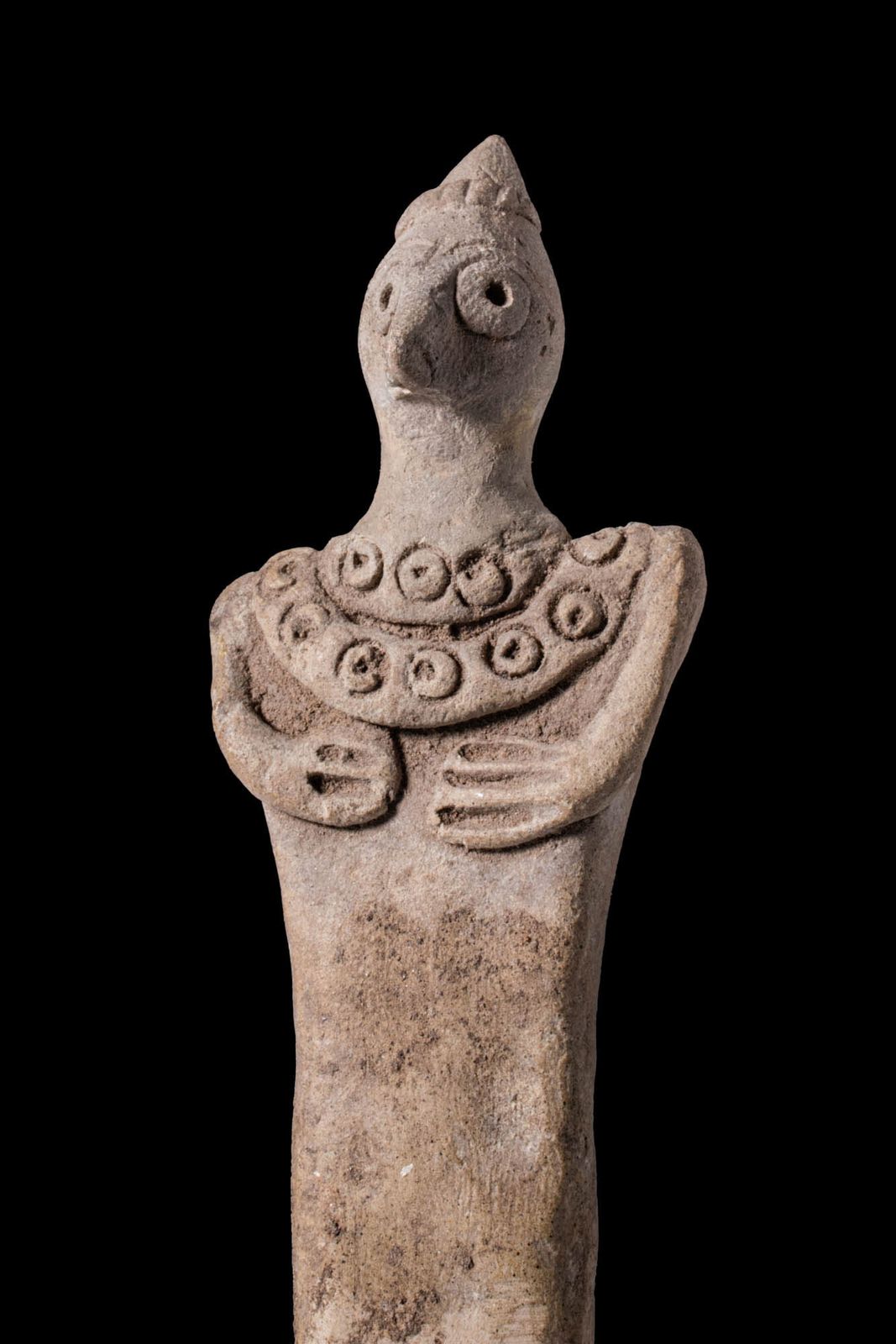
When you hold her - and we have held her - the first thing you notice is the weight. Or rather, the lack of it. Forty grams. Less than a mobile phone. It seems impossible that something so light has carried so much time.
The second thing you notice is the texture. The terracotta is rough in places, smooth in others, marked with the faint traces of fingers that shaped it more than four millennia ago. There are areas of darker discolouration where minerals have leached into the clay over centuries. There are tiny imperfections - a slight asymmetry in the necklace appliqués, a hairline variation in the surface - that remind you this was made by a human being, not a machine.
The third thing you notice is her gaze. Those two circular eyes, incised into the clay with a simple tool, point upward and outward. In certain light, they catch a reflection. For a moment, across forty-five centuries, something looks back.
The Beginning of Something
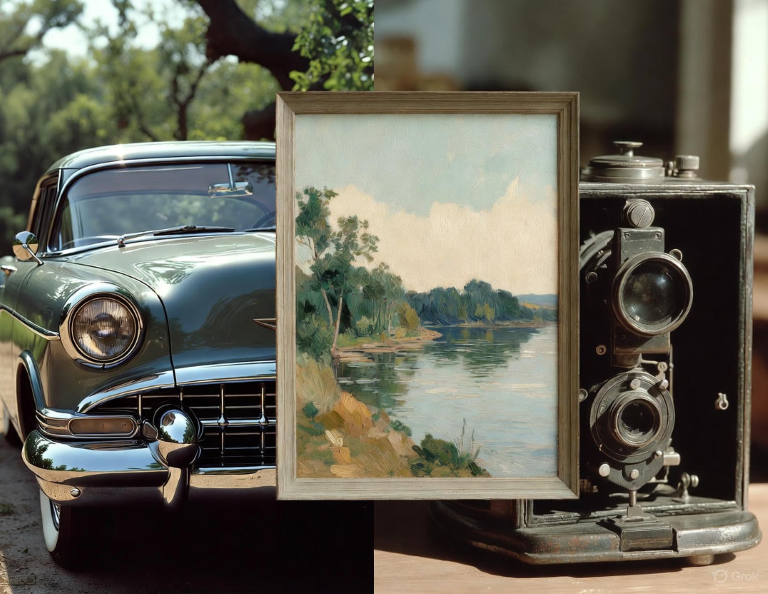
This figurine is the first object we are writing about in this blog - but she is not alone. The RYW Club collection includes objects spanning millennia and continents: a classic German automobile from the late 1980s, a mid-century photographic instrument, works of fine art, and more. Each one has a story. Each one has survived something to be here.
In the weeks and months ahead, we will tell those stories - one object at a time, with the depth and honesty they deserve.
If you believe that cultural objects belong to more than a privileged few - that access to history should not be determined by the size of your bank account - then you are in the right place.
She has waited 4,500 years.
We are just getting started.
Interested in the world of real treasures?